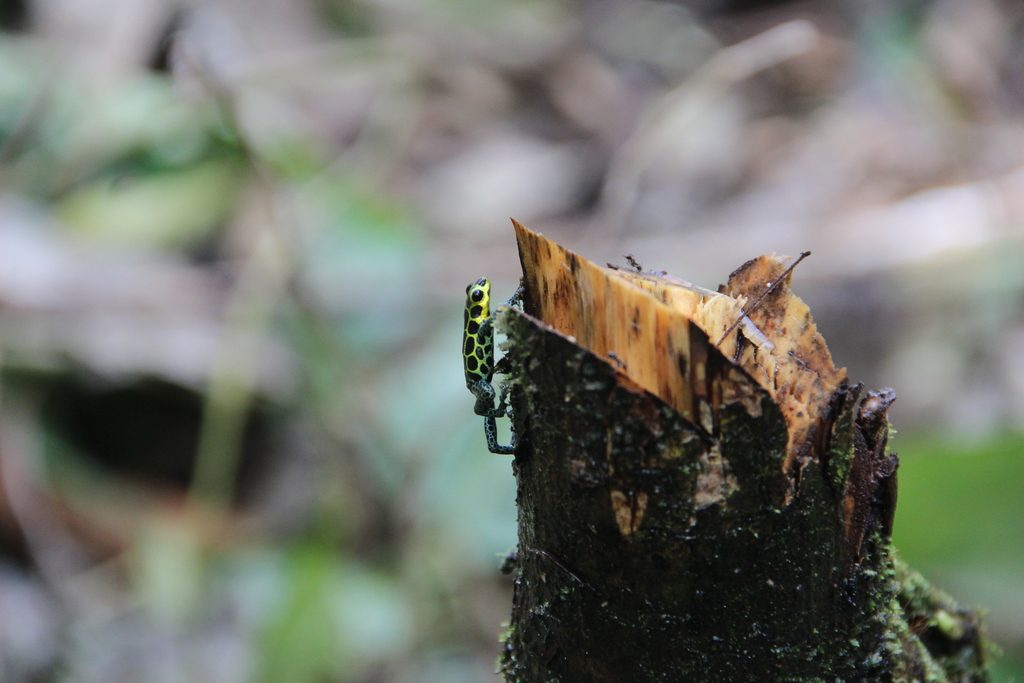
ภาพถ่ายโดยผู้สังเกตการณ์บน iNaturalist เผยแพร่ภายใต้สัญญาอนุญาตครีเอทีฟคอมมอนส์ ชื่อผู้ถ่ายและสัญญาอนุญาตอยู่ใต้ภาพ ไม่ใช่ภาพของสัตว์ที่เราเลี้ยง
ค่าหลัก
Temperature
One ambient band, 21–26°C. This sheet states no warm side, no cool side and no night figure, so none are shown. Same scale on every sheet here, so two species compare by eye.
The sheet states21-26 °C; preference for 22-24 °C; never >28 °C
Humidity
The sheet states80-100%; RO water misting 1-2×/day; small dishes or phytotelms of RO water
UVB
The sheet statesPhotoperiod 12 h; UVB 2% optional; LED plant-spectrum light sufficient
ข้อมูลชนิด
Adult size
The size the sheet states for a grown animal.
Why
Two drawings, because they answer two questions. The silhouette is at true scale against a 1.75 m person: it says how big this animal actually is, which no number does for someone who has never seen one. The bar under it is logarithmic and shared by every sheet here, so a 2 cm isopod and a 4 m python both stay readable on the same axis and two species can be compared at a glance.
How common this animal is
NOT a measure of how many are kept. These filings count animals shipped for any purpose, including the food trade and laboratory supply, and they are United States records only. The three largest volumes in the source belong to a food frog, a bait species and the standard laboratory amphibian.
US Fish and Wildlife Service LEMIS declared wildlife import and export records, as compiled in the received dataset
ตู้เลี้ยงและสภาพแวดล้อม
Enclosure
Drawn from the stated numbers. Only what the sheet states is drawn inside.
Why
The rectangle carries the exact width-to-height ratio of the figures above it, and the ruler under it places that width on the 0–250 cm scale every sheet here shares, so two species still compare at a glance. Nothing is added that the sheet does not name: a lamp drawn on a sheet that never mentions one would be invented equipment. What the sheet leaves out is listed rather than left blank, because an empty tank reads as « none needed ».
The sheet statesBioactive vivarium 30×30×45 cm (10 gal tall) for a pair; bromeliads mandatory as breeding sites and tadpole nurseries
What your climate adds
This sheet states a range to hold. Your local climate decides how much work holding it is. Pick the nearest city: nothing is sent anywhere, the choice stays in this browser.
การสืบพันธุ์
Life course
Read from the lifespan and maturity the sheet states, for animals in care and not in the wild.
Why
The minimum commitment is the low end of that lifespan, and the reproductive window is what is left after maturity: both are subtractions on stated figures, not figures of their own.
ปัญหาสุขภาพที่พบบ่อย
เกร็ดน่ารู้
- สายพันธุ์ผัวเดียวเมียเดียวที่ดูแลลูกโดยพ่อแม่ทั้งคู่ : เป็นเอกลักษณ์ในบรรดาเดนโดรเบต — ♀ เลี้ยงลูกอ๊อดด้วยไข่โภชนาการในโบรมีเลียดแต่ละใบแยกกัน
- การเลียนแบบแบบ Müllerian ระหว่างประชากร : ห้ามผสมข้ามถิ่น — มอร์ฟทางภูมิศาสตร์แต่ละแบบต้องบริสุทธิ์ (จริยธรรมและความบริสุทธิ์ทางพันธุกรรมของงานอดิเรก)
- ขนาดตัวเล็กต้องการเหยื่อขนาดเล็กมาก (D. melanogaster ไม่บินเท่านั้น) และวิวาเรียมที่ไม่มีรู (มุ้งละเอียด)
- สายพันธุ์ผัวเดียวเมียเดียวที่ดูแลลูกโดยพ่อแม่ทั้งคู่ : เป็นเอกลักษณ์ในบรรดาเดนโดรเบต — ♀ เลี้ยงลูกอ๊อดด้วยไข่โภชนาการในโบรมีเลียดแต่ละใบแยกกัน
- การเลียนแบบแบบ Müllerian ระหว่างประชากร : ห้ามผสมข้ามถิ่น — มอร์ฟทางภูมิศาสตร์แต่ละแบบต้องบริสุทธิ์ (จริยธรรมและความบริสุทธิ์ทางพันธุกรรมของงานอดิเรก)
คำถามที่พบบ่อย EN
How big does it get?
Very small, about the size of a thumbnail even when fully grown. That is why we keep them in a tall planted vivarium where you can actually see them.
If it is that tiny, what can it even eat?
Springtails and the smallest fruit flies only, dusted with supplement. You must have a culture running before you take the frog home.
Can I buy a pair?
A pair is exactly how they do best. This species forms strong pairs and the parents raise the tadpoles together, so avoid adding a third frog.
Is this a good first frog?
Not really a beginner animal. The frog itself is hardy, but the tiny food cultures and the planted tank need someone who already enjoys that work.
อุปกรณ์ที่ต้องมี EN
Every line above is deduced from a value this sheet states, and names which one. Nothing here is a general recommendation.
แหล่งอ้างอิง
ชนิดอื่นในกลุ่มเดียวกัน
What this sheet states
This sheet states 5 of 7 of the fields this product runs on. What is missing turns something off: day/night engine and awake count on the globe, the diet section. We show the gap rather than fill it with a plausible number.
UVB is measured but does not count: it is absent from 421 of 678 sheets, and on most of them that is not a gap, since a nocturnal snake's sheet has no reason to state a UV index. Counting it would call the library incomplete without cause.