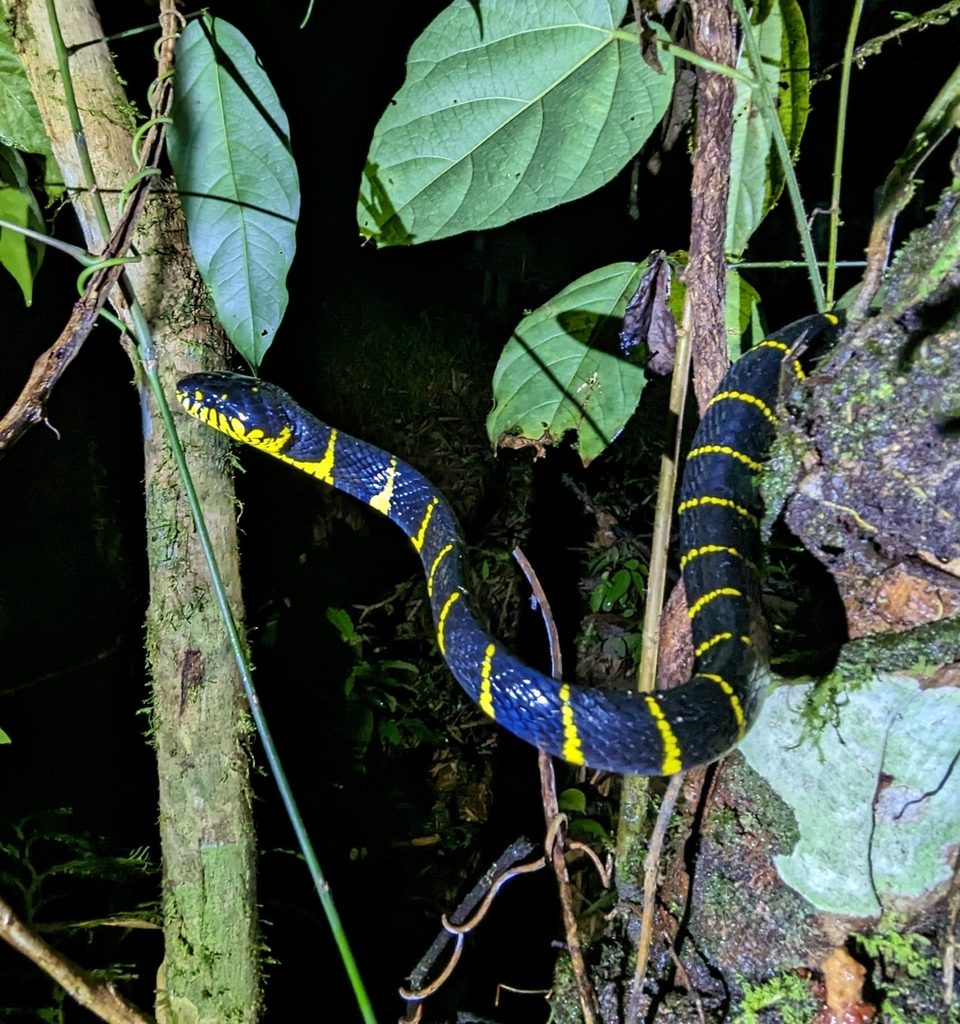
ภาพถ่ายโดยผู้สังเกตการณ์บน iNaturalist เผยแพร่ภายใต้สัญญาอนุญาตครีเอทีฟคอมมอนส์ ชื่อผู้ถ่ายและสัญญาอนุญาตอยู่ใต้ภาพ ไม่ใช่ภาพของสัตว์ที่เราเลี้ยง
ค่าหลัก
Thermal gradient
Day: a real gradient, 29–32°C warm against 29–31°C cool, so the animal chooses. Night: 25.5°C.
Why
Same scale on every sheet here, so two species compare by eye.
The sheet stateswarm 29-32 °C / cool 29-31 °C / night 25.5 °C
Humidity
The sheet states60-80%
UVB
The sheet statesnothing except a ceramic heating element that gives out no light whatsoever
ข้อมูลชนิด
ตู้เลี้ยงและสภาพแวดล้อม
What your climate adds
This sheet states a range to hold. Your local climate decides how much work holding it is. Pick the nearest city: nothing is sent anywhere, the choice stays in this browser.
อาหาร
Feeding rhythm
Twenty-eight days, one row. Each band is a meal window.
Why
The windows widen as they go because the interval is a range: four meals after a 10–14 day cycle land anywhere between day 40 and day 56.
The sheet statessmall mammals, fish, reptiles, and birds; Feeding should be done either weekly or every other week
คำถามที่พบบ่อย EN
Is it dangerous?
Yes, by colubrid standards. It is rear-fanged and a solid bite causes real pain and swelling, and it bites readily.
How big does it get?
1.8 to 2.4 metres, and it is arboreal, so it needs a tall, strong, locking enclosure.
Can I handle it?
We recommend hook handling and display keeping only. This species tends to stay defensive for life.
What does it eat?
Rodents, and some take chicks. It feeds at night and is usually a strong eater once settled.
อุปกรณ์ที่ต้องมี EN
Every line above is deduced from a value this sheet states, and names which one. Nothing here is a general recommendation. What the sheet does not state is listed too, rather than left out: a kit that looks complete is worse than one that names its gap.
แหล่งอ้างอิง
ชนิดอื่นในกลุ่มเดียวกัน
What this sheet states
This sheet states 4 of 7 of the fields this product runs on. What is missing turns something off: enclosure size audit, day/night engine and awake count on the globe, the diet section. We show the gap rather than fill it with a plausible number.
UVB is measured but does not count: it is absent from 421 of 678 sheets, and on most of them that is not a gap, since a nocturnal snake's sheet has no reason to state a UV index. Counting it would call the library incomplete without cause.