KeeprHusbandry You're a Pro? Click here to meet Rex
Atlas / Library / Pythonidae / Ball Python
BeginnerNocturnal · sleeping nowCITES IIIUCN Near Threatened
Pythonidae

Ball Python

Python regiusงูหลามบอล / งูบอลRoyal Python

Part of this is not on the page we cite. We opened it on 10 Aug 2026 and some of the degrees above are not stated there. The values above may still be right, but we cannot show you where they came from, and nobody here has checked them against a second source. Anything about a sick animal goes to a qualified exotic vet, not to a page. reptilesmagazine.com

Photograph: Philippe Hornus · CC BY

14:00
Day

Drag the sun. Ball Python is nocturnal, so what it is doing changes with the light. The sheet states a night temperature, and the rail follows it.

Terrestrial · warm · middlingFrom the sheet: warm end 31–33°C, humidity 55–65%

The way of life is written in this sheet, word for word. The climate words summarise the two figures above them, they do not add to them.

CITES II is a global listing and holds in every country. National law is not global, and we hold no national wildlife law for any country, Thailand included. Check your own authority before buying or selling.

Back to the globe My keep

https://keepr.pet/husbandry/en/python-regius

‹ All husbandry guides
warm end31–33 °C
cool end25–27 °C
Humidity55–65 %
Enclosure120×60×60
Diet10–21 days
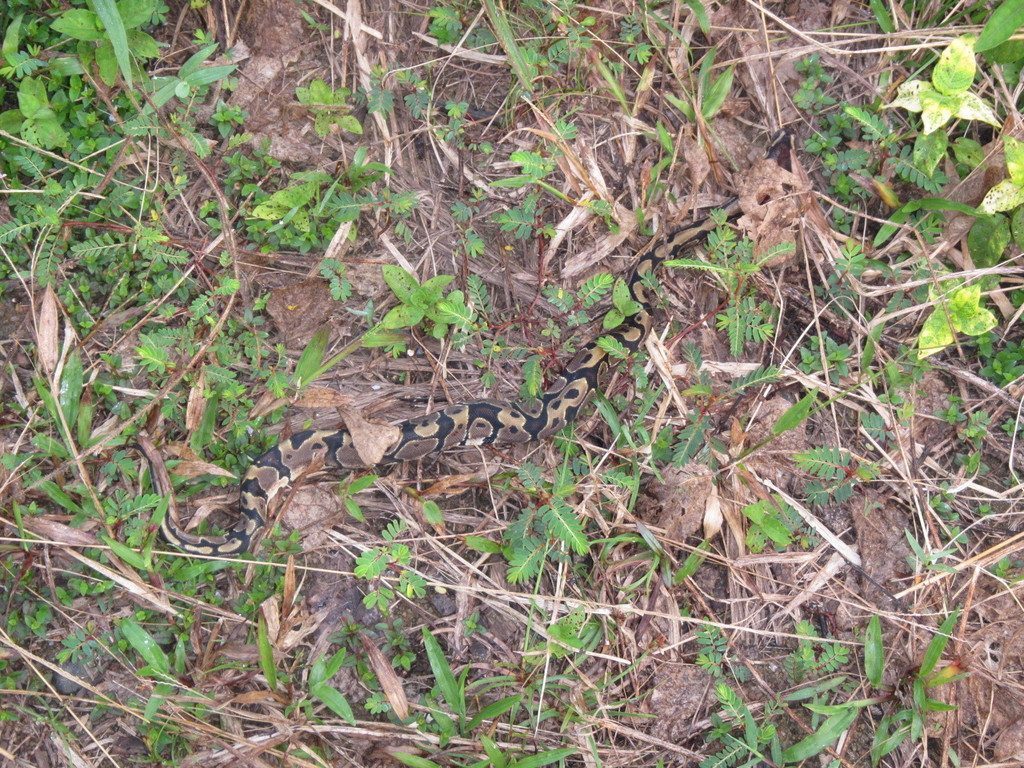
Python regius, photographed in the wild
Photograph · Lucy Keith-Diagne · CC BY

Photographed by an observer on iNaturalist and published under a Creative Commons licence; the photographer and the licence are named under the image. It is not an animal of ours, and no animal was handled by us to produce it.

The numbers

Thermal gradient

152025303540 °C
25–27°Cool side
31–33°Warm side
≥23–24°Night floor

Day: a real gradient, 31–33°C warm against 25–27°C cool, so the animal chooses. Night: never under 23–24°C.

Why

Same scale on every sheet here, so two species compare by eye.

The sheet stateswarm 31-33 °C (88-92 °F) / cool 25-27 °C (77-80 °F) / night ≥ 23-24 °C

Humidity

55–65%Target RH
70%+ during shed

The sheet states55-65% (up to 70%+ during shed)

UVB

T5 5–6%beneficial

The sheet statesOptional; low level (T5 5–6%) beneficial

Identity

Adult size

1.75 m90–150 cm ♀
1520100400 cm
90–150 cmNose to tail, adult

The size the sheet states for a grown animal. This sheet gives a figure per sex; the one drawn is marked.

Why

Two drawings, because they answer two questions. The silhouette is at true scale against a 1.75 m person: it says how big this animal actually is, which no number does for someone who has never seen one. The bar under it is logarithmic and shared by every sheet here, so a 2 cm isopod and a 4 m python both stay readable on the same axis and two species can be compared at a glance.

Family / Order
Pythonidae / Squamata
Distribution
Senegal to Uganda; savanna & forest edges
Adult size
♀ 90–150 cm · ♂ 60–90 cm
Adult weight
♀ 1200–2000 g · ♂ 600–1000 g
Lifespan (captivity)
20–30 yrs (record ~47)
Activity
Nocturnal / crepuscular; terrestrial
Temperament
Shy, docile; balls up when stressed

Morphs

40 morphs, with how each one is inherited. 14 of them carry a documented welfare cost, and those are listed first. A morph list that hides this sells a pattern and says nothing about what it costs the animal.

Bumble Bee (Pastel×Spider)comboCarries Spider → wobbleSuper form: Welfare risk
ChampagneDominantWobble; lethal super — never pairSuper form: Super = lethalWelfare risk
Hidden Gene WomaDominantStrong wobble; lethal superSuper form: super = lethalWelfare risk
Killer Bee (Super Pastel×Spider)comboCarries Spider → wobbleSuper form: Welfare risk
SpiderDominantNeurological wobble in all carriers — discloseSuper form: non-viable (lethal)Welfare risk
Spinner (Pinstripe×Spider)comboCarries Spider → wobbleSuper form: Welfare risk
Super Black PastelCo-dominantDuckbill + kinks — avoidSuper form: (super)Welfare risk
Super CinnamonCo-dominantDuckbill + spinal kinks — avoidSuper form: (super)Welfare risk
Super SableDominantWobble reportedSuper form: Welfare risk
8-Ball (Cinnamon×Black Pastel)comboDefect risk presentSuper form: Caution
Caramel AlbinoRecessiveHistoric kinking in some linesSuper form: Caution
DesertCo-dominantFemale infertilitySuper form: Caution
SpotnoseCo-dominantPowerball complex — mild wobble in some linesSuper form: Super SpotnoseCaution
WomaDominantMild wobble in some linesSuper form: Caution
AlbinoRecessiveAmelanisticSuper form:
AxanthicRecessiveSeveral linesSuper form:
Banana / Coral GlowsexlinkedMale-makerSuper form: Super Banana
Black PastelCo-dominantSingle = fineSuper form: Super Black Pastel
ButterCo-dominantSuper form: Blue-Eyed Leucistic
Candy / ToffeeRecessiveSuper form:
CinnamonCo-dominantSingle = fineSuper form: Super Cinnamon
ClownRecessiveSuper form:
Desert GhostRecessiveSuper form:
EnchiCo-dominantSuper form: Super Enchi
FireCo-dominantSuper form: Black-Eyed Leucistic
Genetic StripeRecessiveSuper form:
GHICo-dominantSuper form: Super GHI
Ghost / HypoRecessiveSuper form:
Lavender AlbinoRecessiveSuper form:
LeopardRecessiveSuper form:
LesserCo-dominantSuper form: Blue-Eyed Leucistic
MojaveCo-dominantSuper form: Blue-Eyed Leucistic
MysticCo-dominantSuper form: Mystic Potion (BEL)
PastelCo-dominantBrightening, blushingSuper form: Super Pastel
PhantomCo-dominantSuper form:
PiebaldRecessiveWhite patchesSuper form:
PinstripeDominantSuper form:
UltramelCo-dominantSuper form: Super Ultramel
VanillaCo-dominantSuper form: Super Vanilla
Yellow BellyCo-dominantSuper form: Ivory

How common this animal is

53/100Search interest as a pet

Relative Google search interest for the species as a pet, 2020. The scale is relative within the study: 100 is the most searched reptile it measured, not a count of animals. Reptiles only, and only the species the study measured. An absent value means the study did not measure that species, not that nobody keeps it.

Valdez JW (2021), Using Google Trends to Determine Current, Past, and Future Trends in the Reptile Pet Trade, Animals 11(3):676

1,777,766Live individuals in declared US trade filings

NOT a measure of how many are kept. These filings count animals shipped for any purpose, including the food trade and laboratory supply, and they are United States records only. The three largest volumes in the source belong to a food frog, a bait species and the standard laboratory amphibian.

US Fish and Wildlife Service LEMIS declared wildlife import and export records, as compiled in the received dataset

Enclosure and conditions

Enclosure

substrate31–33 °Cwarm hidecool hidewater55–65 % RHUVB tube120 cm60 cm
warm sidewarm hidecool hidewatersubstrateUVB tube
50100150200 cm
120 × 60 × 60 cmWidth × depth × height
72dm² of floor

Drawn from the stated numbers. Only what the sheet states is drawn inside.

Why

The rectangle carries the exact width-to-height ratio of the figures above it, and the ruler under it places that width on the 0–250 cm scale every sheet here shares, so two species still compare at a glance. Nothing is added that the sheet does not name: a lamp drawn on a sheet that never mentions one would be invented equipment. What the sheet leaves out is listed rather than left blank, because an empty tank reads as « none needed ».

The sheet states120 × 60 × 60 cm (4×2×2 ft) for an adult

Warm side
31–33 °C (88–92 °F)
Cool side
25–27 °C (77–80 °F)
Night
≥ 23–24 °C
Humidity
55–65% (up to 70%+ during shed)
UVB
Optional; low level (T5 5–6%) beneficial
Ventilation
Good cross-ventilation (prevents RI)
Min. size
120 × 60 × 60 cm (4×2×2 ft) for an adult
Substrate
Coconut husk / cypress, kept dry & clean
Hides
≥ 2 tight hides (warm + cool)
Water
Large bowl big enough to soak

What your climate adds

This sheet states a range to hold. Your local climate decides how much work holding it is. Pick the nearest city: nothing is sent anywhere, the choice stays in this browser.

Diet

Feeding rhythm

Juvenile
every 7–10 d
Adult
every 10–21 d
2Meals in 28 days · adult

Twenty-eight days, one row. Each band is a meal window. This sheet states a figure for each age, so each age has its row.

Why

The windows widen as they go because the interval is a range: four meals after a 10–14 day cycle land anywhere between day 40 and day 56. A young animal's row is drawn only where the sheet gives one: working it out by dividing the adult interval would be inventing a ration.

The sheet statesAppropriately sized rodents (mice → rats) · Every 10–21 days

Staple
Appropriately sized rodents (mice → rats)
Prey size
≈ 1–1.25× the widest part of the body
Method
Frozen-thawed strongly preferred
Hatchlings
Every 5–7 days
Juveniles
Every 7–10 days
Adults
Every 10–21 days
Supplements
None — whole prey is complete
Fasting
Normal in winter / breeding / pre-shed

Behaviour and handling

HandlingCalm, ideal beginner; support whole body
Stress signsFood refusal, constant hiding, glass-searching
CohabitationHouse individually: never cohabit
DefenseBalls up (hence the name); rarely bites
ChildrenOK with adult supervision

Reproduction

Life course

Day 0Hatch
20–30 yrLifespan in care
55–60 dIncubation
3–11 eggs (avg ~6)Clutch
20 yrMinimum commitment
Sexual maturityNot in our data

Read from the lifespan and maturity the sheet states, for animals in care and not in the wild.

Why

The minimum commitment is the low end of that lifespan, and the reproductive window is what is left after maturity: both are subtractions on stated figures, not figures of their own.

Sexual maturity F
2–3 yrs & ≥ 1200–1500 g
Sexual maturity M
8–18 months & ≥ 600 g
Sexing
Probing / popping; ♂ longer tail + spurs
Clutch
3–11 eggs (avg ~6)
Incubation
~55–60 days at 31–32 °C, ~90% RH
Breeding trigger
Cooler nights + seasonal cycling

Common health problems

Respiratory infection
Signswheezing, clicking, open-mouth breathing
Preventcold/damp + poor ventilation → keep correct temps + airflow
Scale rot
Signsblistered/discolored belly scales
Preventwet dirty substrate → dry clean substrate
Retained shed / eye caps
Signsincomplete shedding
Preventlow humidity → 60–70% + humid hide during shed
Snake mites
Signstiny moving dots, over-soaking
Preventquarantine & inspect new arrivals

When to see a vet

This is not veterinary advice. If red flags appear (open-mouth breathing, months of weight loss, 'stargazing', persistent regurgitation) consult a qualified exotic (herp) veterinarian. Quarantine new arrivals 30–90 days.

Good to know

  • Curls into a tight ball head-in when scared: its whole defense (hence 'Ball').
  • 'Royal' (regius): legend says Cleopatra wore them; sacred to the Igbo of Nigeria.
  • The most kept pet snake on Earth and the backbone of the morph hobby.
  • Curls into a tight ball head-in when scared — its whole defense (hence 'Ball').

Common questions

Does it bite?

Very rarely: docile, balls up instead.

How big will it get?

♀ up to ~1.5 m, ♂ smaller.

Why won't it eat?

Usually normal (season/shed/stress); vet only if real weight loss.

How long do they live?

20–30 years: a long commitment.

What it needs

Enclosure at least 120 × 60 × 60 cmbecause enclosure120 × 60 × 60 cm (4×2×2 ft) for an adult
A heat sourcebecause tempwarm 31-33 °C (88-92 °F) / cool 25-27 °C (77-80 °F) / night ≥ 23-24 °C
A thermostat to regulate itbecause tempwarm 31-33 °C (88-92 °F) / cool 25-27 °C (77-80 °F) / night ≥ 23-24 °C
A thermometerbecause tempwarm 31-33 °C (88-92 °F) / cool 25-27 °C (77-80 °F) / night ≥ 23-24 °C
A way to check the night figurebecause tempwarm 31-33 °C (88-92 °F) / cool 25-27 °C (77-80 °F) / night ≥ 23-24 °C
A hygrometerbecause humidity55–65% (up to 70%+ during shed)
UVB 5-6%, stated as beneficial rather than requiredbecause uvbOptional; low level (T5 5-6%) beneficial

Every line above is deduced from a value this sheet states, and names which one. Nothing here is a general recommendation.

  • PVC enclosure 120×60×60
  • Thermostat (pulse)
  • Heat source (DHP/mat)
  • 2 hides (warm+cool)
  • Coco/cypress substrate
  • Large water bowl
  • Digital hygro/thermometer
  • F/T rodents + tongs

Sources

Others in this group

What this sheet states

100%
TemperatureHumidityEnclosure sizeActivityOriginDietSourcesUVB

Every field this product runs on is stated here. That is not a claim that the values are right: it says what the sheet states, not whether it is true. Whether a human has read it is the badge at the top of this page.

UVB is measured but does not count: it is absent from 421 of 678 sheets, and on most of them that is not a gap, since a nocturnal snake's sheet has no reason to state a UV index. Counting it would call the library incomplete without cause.